


Last week, like so many people appalled and upset by what was unfolding on the streets of Minnesota after Renee Good’s killing, I joined an emergency meeting of Red Wine & Blue’s Moms for Good: Joining Together to Stop ICE.
Despite the somber circumstances, it was warm, uplifting, and life‑affirming.
Red Wine & Blue, founded by Katie Paris after the 2018 midterms, has grown into a political force, half a million women strong, organizing for justice, community care, and systemic change. Its influence continues to grow.
More than 12,000 people signed up for the call, with thousands of women (and at least one man) tuning in to learn how to fight systemic racism and oppression, and to hear former FBI Director Andrew McCabe’s reaction to the shooting (his take: it “appears to be an absolutely pointless killing”).
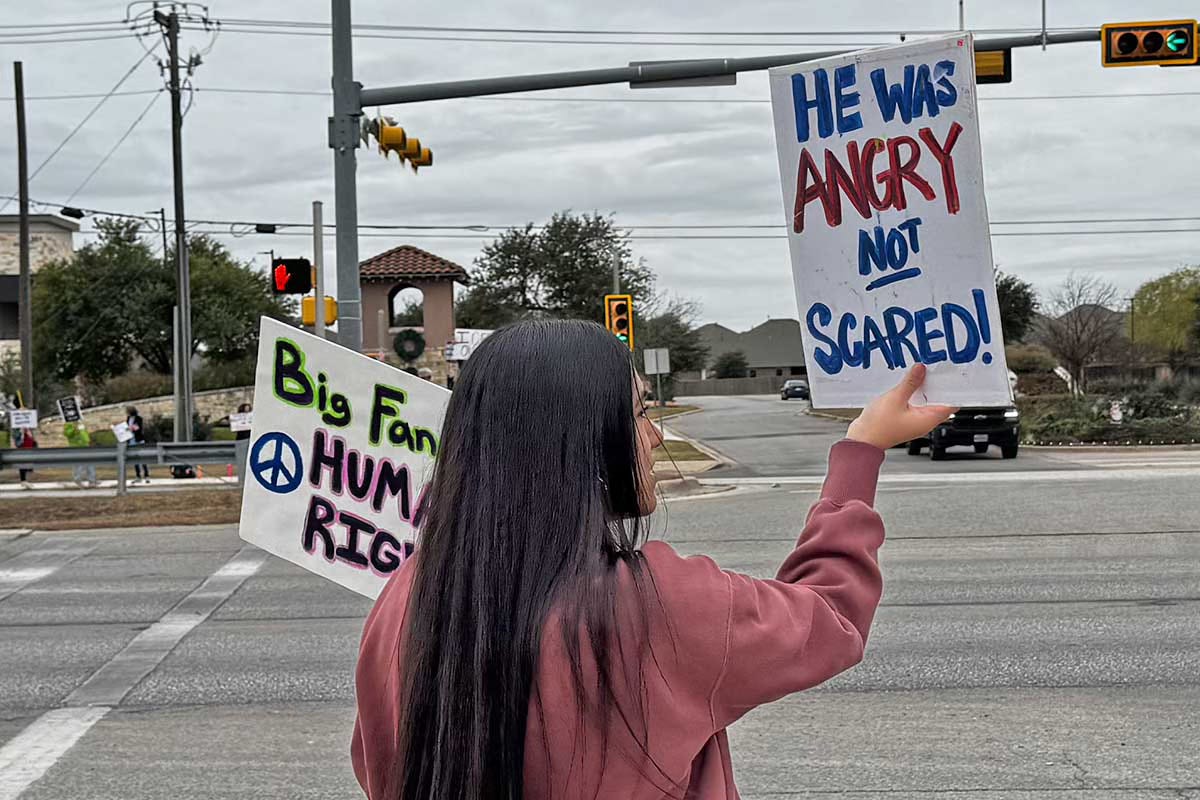
Who’s afraid of organized women?
No doubt, these are the so-called “organized gangs of wine moms” Fox News columnist David Marcus was targeting in his Jan. 11 piece. These are the women on the front lines in Minnesota and other cities around this country.
Marcus likened these moms to criminals using “Antifa tactics to harass and impede” ICE agents in “bastions of Democratic socialism.”
But as Lyz Lenz pointed out, these moms in Minnesota are doing what moms have always done:
“In this America, these women have always been collecting supplies, always delivering meals, always finding homes for people displaced; always connecting people with lawyers, doctors, cleaning supplies, hot meals, hot showers.”
“These are the women (mostly women) who are working to create a safety net for their friends and neighbors in a city under federal occupation. So many of them have their own jobs, their own kids, and their own families, which they juggle as they’re working for and caring for the families around them.”
What the far right is painting as extremist is just another shade of the community care that women have done since the beginning of our existence.
Undermining through labels
The wine mom label isn’t random, as ridiculous as it sounds. It’s a strategic attempt to ridicule and undermine women. Marcus, and others like him, want you to believe these women are extremists because their organization challenges a certain vision of power, one that is white and male.
“Last year it was cat ladies. This year, it’s us,” joked Reshma Saujani, founder of Moms First, during the call.
She wrote later about how it was the modern version of calling women hysterical.
Jokes aside, both she and Marcus understand that organized women represent a real threat to entrenched power. What makes them dangerous is that they’re standing up and saying enough. And their place in society and position of influence, whether they recognize it or not, makes them some of the most powerful voices in this fight against fascism.
Othering and the pejorative use of AWFUL
Saujani cautioned those on the call not to underestimate these attacks, calling them century-old tactics used to silence, exhaust, and oppress women:
“I want us in these conversations to really understand and see the con, see the tactics, see the strategies that they’ve been using, and they’ve been using this for 100 plus years, and it is to make us be quiet and feel exhausted and be oppressed.”
It’s no surprise that most of the attention has focused on women protesting, rather than men. Because one of the great tactics of undermining people is by “othering” them. These aren’t just women, sisters, and mothers. They’re gangs of wine moms. They’re Antifa.
They’re AWFUL, or Affluent White Female Urban Liberal, another term that’s been ramping up in the wake of Good’s killing, according to the New York Times. In some circles, it’s just AWFL. I hadn’t seen it used in the wild until my husband sent me a screenshot of a post in his feed this week. It felt like the acronym was being aimed straight at me.
It’s not just about categorizing people in groups and assigning negative meanings. It’s about creating power imbalances, using “us” vs. “them” language to justify discrimination and violence.
A real political force
Dr. Shauna Shames, a political scientist and co-editor of the book “The Right Women: Republican Party Activists, Candidates, and Legislators,” told the New York Times that the description of white, urban women as violent radicals reflects the worries of white, non-college-educated men, who make up the core of President Donald Trump’s MAGA movement and who perceive their place in society slipping.
And they are right to worry. These women are in a real position to challenge the established order. They also hold real voting power.
According to the Times:
“Seventeen percent of all voters last year were white women with college degrees, nearly matching the 18 percent who were non-college-educated white men.”
Let’s be clear. White women are a serious threat to those who wish to undermine democracy … but only if we wield that influence thoughtfully. Paris acknowledged that “we are most effective when we follow the lead of those most impacted” and “without centering ourselves.”
To be clear, Good’s killing wasn’t just a tragedy. It reveals the volatility and gendered rage that white women can provoke when they challenge authority. But it’s not the only death that’s happened at the hands of ICE. It underscores the larger injustices, the threats to our Constitution, and what we’re really fighting for.
Author Isabel Allende famously said:
“Any hope for peace and prosperity is in the hands of Western women.”
And this has never been more true for us.
But it’s worth asking: what keeps more of us from showing up? The answer isn’t just politics; it’s cultural conditioning. For many women, it comes from a lifetime of being told our worth depends on our physical appearance. And that’s intentional.
What does body and beauty culture have to do with it?
I’ve been thinking a lot about this over the last couple of weeks while reading registered dietitian Deb Benfield’s book “Unapologetic Aging” ahead of an upcoming interview. Your first reaction may be, “What does body image and aging have to do with politics?”
But we know the answer is plenty.
While the book’s core focus is on cultivating more kindness toward our bodies as we age, Benfield also reveals how diet and beauty culture function as systems of oppression, keeping women locked in battle with themselves in order to preserve the existing social order.
What we do with our bodies has always been political, more so now in this deeply polarized version of America.
Our body obsession robs us of collective focus, morale, and the radical self-confidence necessary for taking action against injustice. I’m not saying we have to lay down the lipstick, but we do have to understand that the pressure we feel to look a certain way germinates from systems that are intentionally trying to keep us down.
The ‘default’ body and systemic power
Drawing from the work of Sonya Renee Taylor, Benfield outlines the concept of “the default body,” one that is white, thin, young, male, able-bodied, fit, heterosexual, neuronormative, cis-gendered, and “healthy.”
“We live in a culture that values certain bodies and pushes others to the margins,” Benfield writes.
And this has perhaps never been more true in America than now.
“Those with the default body belong and have power automatically, without earning their places, solely based on body characteristics and appearance. The more identities you carry outside of this default, the more you are pushed to the margins or seen as ‘other.’”
Within this framework, she argues, patriarchy enforces the beauty standards that measure a woman’s worth by how closely she aligns with that default. Diet culture reinforces this by selling conformity, by rewarding women for fitting a mold defined by male ideals of beauty, and punishing those who don’t.
Which is why it’s so dangerous when women start protesting. It shows we’ve stopped conforming. We’re no longer allowing the usual control tactics to influence behavior.
And our awareness of these systems of oppression is something that, once seen, can’t be unseen. They don’t just magically go away. But we must see and understand them.
Staying awake
Naomi Wolf famously wrote in “The Beauty Myth”:
“A culture fixated on female thinness is not an obsession about female beauty, but an obsession about female obedience. Dieting is the most potent political sedative in women’s history; a quietly mad population is a tractable one.”
When we’re able to see past the distractions, we wake up to the larger harms happening across our communities. Serving them becomes a catalyst to greater purpose.
Many of us are no longer quietly mad (both in the way Wolf meant and the broader meaning of the word). And many more are waking up to the social sedatives that have kept us submissive. But real, sustained change requires more of us to stay awake.
What moved me most about the Moms for Good event was how clearly the speakers understood the tactics being used to undermine women and how they weren’t falling for them.
When asked what civic engagement looks like for women juggling care, work, grief, and daily survival, Holli Holliday of Sisters Lead Sisters Vote answered with conviction: it starts with knowing we are enough.
“In this moment, we are exactly enough. But it is not about us singularly, it’s about us collectively. And when we are at our best, and show up our best, is when we are seeking to do something joyfully, when we are seeking to do something that cares for each other … even in moments of great trauma and travesty and tragedy.”
I’d love to hear from you …
How are you feeling today? How are you taking care of yourself? I’d love to know what’s helping you stay engaged.
Thanks for this thoughtful piece, Kristi. One of the healthy points of entry into culture and politics that I place emphasis on is diversity. We can learn so much from each other when we respect our differences in how we look, think, and feel as individuals, citizens, and society.
When women embody their hearts and wholeness, it illuminates the disintegrated parts of the rest of humanity. Those who resist integrating those parts demonize the woman re-wilding herself….hence the backlash, as it is a tightening of the grip to keep the status quo. The thing is, once we awaken as women and show our light, there’s no going back. It is the spotlight illuminating the path towards evolution. That is our power. And there is no other option but to stay in it. The alternative of shrinking got us into this mess in the first place.