


Hi friends. A quick note before this interview: I don’t think I could publish this piece without acknowledging the story that has been on my mind, and probably yours, most of this week: the allegations of rape made by a former Cornell student against seven fraternity members.
I’ve been reading as much as I can, trying to gather enough details to make sense of not just the cruelty and violence that Jane Doe alleges, but also the aftermath: the university’s handling of the case and the decision not to bring criminal charges. And yet, there is no excuse.
Too often, our culture minimizes, excuses or looks away from violence against women. We must keep pushing for change. We must continue to condemn sexual violence against women, in all of its forms. Each of us must call it out, but especially men. We must teach our sons and daughters what consent looks like and to speak up when they see inappropriate behavior, as hard as that might be. We also need to speak out against the laws in New York and 18 other states that make it harder to prosecute sexual assault when a victim becomes incapacitated after voluntarily consuming alcohol or drugs.
If this has been on your mind, if you just need to vent, feel free to let it out here.
While the context is quite different, the conversation below is also about the cultural beliefs we absorb and how they shape our relationships with ourselves and others. It reminded me a lot of the interview I did with Megrette Fletcher RDN, CDCES about how weight loss isn’t required for health and even sometimes works against it. You can read all of my Almost Sated interviews here. Thanks for being here. 💙
My conversation with Barbados nutritionist Christina Hall
We tend to think a lot of our beliefs around food and diet are universal, rarely questioning where they come from. More steeped in science or fact, based on free will and individual choice, and less influenced by culture. This interview might change your mind about that.
Christina Hall, a Barbados-based non-diet nutritionist with a master’s in human nutrition and public health, joined me for a conversation about diet culture, size preferences in this Caribbean island, and how Western body ideals influence food culture outside its borders.
Before she started her career, Christina believed nutrition was simple. Eat more fruits and veggies. Drink more water. The deeper she went in her studies, the more complicated it became. “The weil that was over my eyes was lifted,” she says.
We cover a lot of ground here, including:
How Caribbean body ideals value curves, but only in certain places. There’s stigmatization against larger bodies, increasingly following Western beauty standards.
How Barbados’ food culture was shaped by slavery, scarcity and status, and why some of those traditional foods are incorrectly labeled unhealthy.
How Christina found intuitive eating and why she focuses less on weight loss and more on markers like blood sugar, sleep, stress, and overall health.
What she worries about as GLP-1 medications become more common in her country.
Why even well-intentioned public health efforts can do harm when anti-fat bias is unchecked.
What I loved about this conversation is how quickly it moves beyond this idea that food choices are about free will and individual choice and shaped more by collective social and cultural norms.
A quick Almost Sated housekeeping note: My fall subscription sale continues for a few more days. You can get 50% off an annual paid subscription, $30 for the year instead of $60, for as long as you remain a subscriber. If you’ve been thinking about becoming a paid subscriber, now’s a very good time.
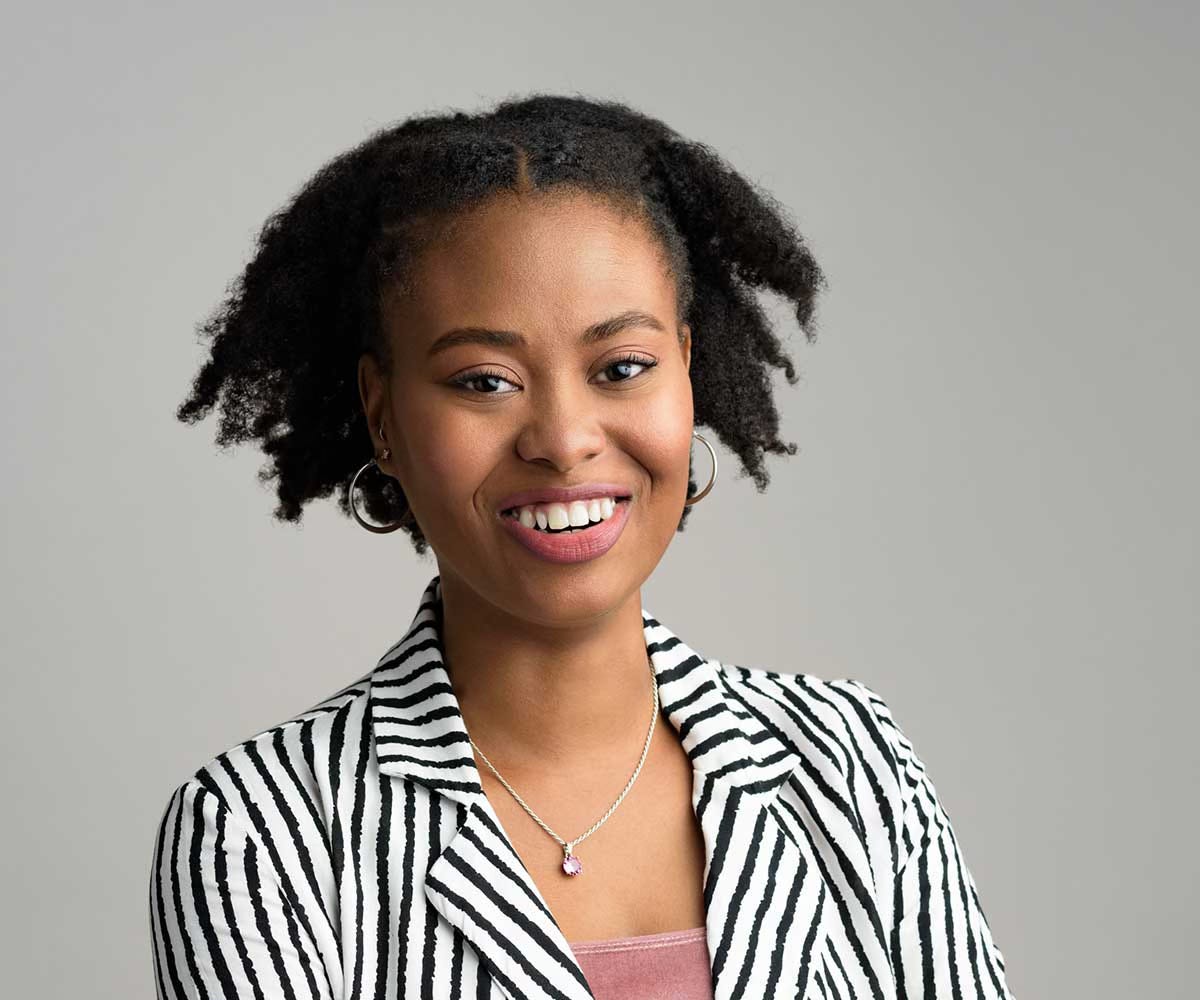
Christina Hall is a non-diet, intuitive eating nutritionist in Bridgetown, Barbados. She holds a Master’s degree in Human Nutrition with a focus in Public Health from the London Metropolitan University and is an Associate Registered Nutritionist (ANutr.) through the Association for Nutrition in the UK. You can reach her through her website and blog. She is available for virtual sessions in Barbados and the UK.
Dared to Ditch Interview with Christina Hall
Kristi: When I saw that you were a non-diet nutritionist based in Barbados I thought it would be interesting to talk about the differences from a cultural standpoint between Western American ideals and Barbados.
Christina: I was a teacher for about four years at a secondary school. I was somebody who was interested in food and nutrition. The more I interacted with my kids, the more I realized they need some support in this way.
Over time, I decided that I would leave teaching and study nutrition. I had this worldview that I’m going to save the world with nutrition, because in Barbados, our population, they say that we have high obesity rates. And we have lots of non-communicable diseases. So those would be hypertension, diabetes, chronic kidney disease, which I have learned lots more about in the last four years.
I left teaching in 2018 with all hopes of saving Barbados, one person at a time, using this fantastical idea of what I thought nutrition was. I was doing a master’s, and because it was focused on public health, the veil that was over my eyes was lifted because I thought, oh yeah, it’s just so simple. People should eat more fruit and veg, for example. But it was a lot more nuanced than that by the end of it.
How I got into non-diet nutrition was somewhat based on my learning during my master’s, following other people in the nutrition world globally, talking about what non-diet nutrition looks like and recognizing that was actually what I was thinking about the whole time without knowing it was called that. Intuitive eating fits so well with what I already knew from how my parents had raised me. It fit. I didn’t know it had a name at all.
It has definitely been a bit of a challenge coming back home, trying to be that nutritionist that’s not wagging their finger. There’s this unfortunate perception that when you go to a nutrition professional they’re going to wag their finger at you and say, no, you should never eat X, Y, Z.
The space here is a little small. Marketing-wise, one of the reasons I’m so surprised that people come across me is because the ones that market tend to market weight loss. Then we have another challenge with people who are not qualified nutritionists or qualified dietitians also trying to market weight loss at people constantly. It has been an interesting journey, and I’m still trying to figure out my footing.
Kristi: If you spent your whole life in Barbados, can you tell me what a healthy body meant to you growing up?
Christina: I was very blessed. I have not been bullied or ostracized for what my body looks like. I’m a person who is very much straight-sized, which in the Caribbean can be a double-edged sword, because we are of African descent.
In some ways, having a little bit more curves is seen as beautiful, and yet still having too much weight is seen as you’re not really taking care of yourself. If you’re straight-sized, people might think you don’t eat enough. Some people might think otherwise. So it’s a real mixed bag.
I was lucky that in my family, we didn’t tend to focus too much on that.
But I do know a couple of people who would have been bigger than me who have talked about their experience being told by people, you’ve got to lose weight, you’re too big for your age, that kind of thing. My experience, in comparison to many others, has been very beautiful.
When I was in teaching is where I tended to see it a little bit more, because the children literally mirror their parents’ thoughts, or whoever is around them. There would be a little bit more discussion about what somebody looks like, their body size, or shaming them for things that they do.
When I started to dive into intuitive eating, non-diet nutrition, I realized I might have had the opposite experience because I’ve always been in a straight-size body, but wanted to be an ally for persons living in a bigger body. It was me examining what my relationship was with my own body first and recognizing that I didn’t have it as bad as others. I didn’t have it as bad as some of my closest friends.
I did spend all of my life, except for my studying years and traveling, in Barbados. So it’s quite a mixed bag in terms of body image. We want certain things to be big, like behinds. Guys must have muscles, but if your belly is big, I find that we’ve been having more of that trickle-down effect from the Western world, where we don’t want certain parts of our body to be too big.
Kristi: In America, my understanding from the nutritionists, dietitians and therapists I’ve talked to is that most of them are not taught a non-diet framework as part of their formal education. Was that the same with you? How did you get into the non-diet aspect of it?
Christina: I studied in the U.K. at London Metropolitan University, and I did a master’s in human nutrition with a purpose in public health. It’s not that we were exactly taught about non-diet nutrition, but I came from a pure science background. I did chemistry and biochemistry before, so everything is very strict.
In doing my master’s, I was recognizing that we have our various models of healthy eating guides for countries, we have our public health policies, but one of the things that stood out to me when we were talking about policies was health policies all over the world needed to be all-encompassing of other aspects. Making healthy food affordable or making sure people eat enough fruit and vegetables. It was much more holistic than that.
It led me down the rabbit hole, after I graduated, of finding other people who were working in the nutrition space. I ended up speaking with about 10 dietitians and nutritionists from across the world. This happened to be during COVID times. Some of them were doing intuitive eating, some were calling it non-diet nutrition, some anti-diet nutrition. Some of the continuing professional development opportunities talked about anti-fat bias, talked about sensitivity training.
I went down that rabbit hole, came across the book by Sabrina Strings [Fearing the Black Body]. I came across Evelyn Tribole and Elyse [Resch, co-authors of the book Intuitive Eating]. and did some of that continuing professional development over time. That’s really how I got here.
I think it does take a little bit more to step outside of what I learned at school. This is real context of the world. How do I deliver this information in a way that allows people to keep their cultural foods? Because learning in the U.K., they’re not talking about my cultural foods in Barbados. How do we keep that aspect and still talk about making sure that your body is a healthy body? So I went down that rabbit hole and came out on this side.
Kristi: For someone who has never been to Barbados, what should I understand about the culture to help understand how people think about food and bodies?
Christina: We continue to evolve because we are the kind of people that are very adaptable. Our culture changes very quickly with the rest of the world. If I think about the roots of it coming from enslaved Africans, the way that we ate, the foods that we had, our food started out as the scraps.
We have foods like something called pudding and souse, which is pickled pigtails, cucumbers that are pickled with lime and parsley, garlic, that kind of stuff. You make a steamed pudding. We might have started as, we get the scraps, whatever piece of protein we get, we try to make that into something.
We have been evolving since the abolition of slavery, since our country has become independent. And so we have a lot more Westernized foods right now. Barbadian culture is in the process of changing. Globalization has caused it to change a lot. We have moved away a lot of times from more cultural foods.
I find that sometimes public health messaging can demonize our traditional foods, which actually might be better for us. But because we are in a transitionary phase, we don’t have a lot of research being done in nutrition in Barbados. We do a lot of quantitative research, like these are the number of people with obesity, but the root causes are not addressed.
Our food environment has changed over time with globalization, which has been a difficult thing because our relationships with our typical foods have changed. You might find the drive-thru lines are always packed. I mean drive-thru for places like KFC, fried foods, deep-fried foods. They’re always packed, even though the supermarket will also be packed.
Bajans love meat. We love to have a big piece of meat on our plate because, if we think about the ancestors that we’ve had, we got the scraps. Whatever meat you got is what you had to do with.
So now meat is seen as the status symbol. You buy this expensive thing and put most of that on your plate. Eating something that, as we like to call it, rabbit food, or the greens and the veg, some people would say that’s rabbit food. We don’t want to appear as though we’re poor.
We’re still trying to find our footing. We need to do a lot more research on what’s actually happening in our food environment, what people’s attitudes towards food look like.
Kristi: In terms of the people you work with, why are they typically coming to you? Is it to manage a chronic medical illness?
Christina: A lot of the times they are. I worked with a cardiac rehab program at one point. The person might have had a cardiac event or they might be trying to prevent one. A lot of times they thought they had to lose weight in order to prevent another event from happening.
I used to ask persons about their food intake, but then we would talk about stress. We would talk about sleep. Do you have any hobbies? Do you have things that you do when you want to relieve stress? You recognize that persons don’t really spend a lot of time thinking about that.
In my private practice, I see a lot of people who come with either the chronic condition question, or they are trying to prevent it. The starting point is often, my doctor told me I need to lose weight. So it’s kind of like they’ve been pushed toward weight loss a lot of times to solve a lot of the problems.
Based on my training in my master’s and otherwise, yes, your weight and weight management can be helpful. So are the other aspects. We kind of lack that in-between phase where we also consider, aside from being a particular body size, what else are you doing that might be impacting your health?
Kristi: Along with the types of food people are eating, have body-image ideals shifted?
Christina: It really depends. We’re in a culture that is still transitioning to whatever we are. I am strongly of the belief that we have been very much influenced by outside cultures, especially now that you have more access to seeing what everybody else is doing.
I can’t say that there’s a particular body shape or size that people like. They’ll see I’m a nutritionist and they’re like, oh yeah, I would like to be small like you. I do remember at least one client who was adamant. She wanted me to be really rough and hard on her so that she would be disciplined and do these things to lose weight.
In my private practice, it tends to be people with conditions. A lot of times there are people who want to lose weight. But I have to dig a little bit deeper before I say I’m going to strictly focus on weight loss, because to me, weight loss is not the goal. It can be part of the outcomes, but it’s not the main goal.
For my practice, I would be more focused on things like: Are your blood sugar numbers looking better? Is your HbA1c, which is another test to see how your body is managing blood sugar, looking better? Are you sleeping better? Are you getting in more physical activity? Have you made your fiber goals? Those are things I tend to focus on more than weight loss.
If weight loss comes along by the way, then great for you. But there have been several times where I’ve had to tell people, all right, look, stop. Right now, you do not need to be focused on losing weight. That is not in the best interest for your health. They come with their goals in mind, but we might have to redirect the goals based on what’s going on with you.
Kristi: Here, there’s a large part of the population that sees fatness across the board as unhealthy. People don’t separate out: What is my cholesterol? What is my blood sugar? What is my blood pressure? They’re just thinking, fat is unhealthy. Is that also happening there, or less so?
Christina: It is. I will still say that we’re in the early stages of people really recognizing it. I’ve had to redirect people from thinking, it’s not about being less big. What are your other numbers saying? Are we only looking at this number on the scale? Are we only looking at your BMI? It’s still a very new conversation.
It’s still a very new conversation in terms of people recognizing that body size is not exactly correlated with your health. I know that there are other people who are championing this as well, but we also have so many people who are very heavily focused on showing results. People love to see results.
One of the reasons that I wouldn’t post anything like that on my social media is because you moving from, say, 160 pounds to 120 pounds does not mean that you’re healthier. That’s not what the evidence shows, that’s not what the research shows. I’ve been having those difficult conversations and finding other people who have been having those difficult conversations. I’m trying to continue to build out that community because we have a lot of persons here who are more focused on weight rather than what the overall person’s health looks like.
Kristi: What about GLP-1s? Is that a conversation that’s happening yet?
Christina: Yeah, it’s happening. It’s starting. I went to a conference about that in Barbados about two years ago. We’ve had the older models of weight-loss drugs before. Many people with diabetes tend to be on those, or other people for other reasons might be on those.
It’s still a very much newer conversation because, in Barbados, the culture is that the doctor runs and manages the patient. Sometimes that also means that they manage the nutrition. And sometimes that could be dangerous because, while what they know could be very helpful to patients, they don’t know everything.
I think the GLP-1 conversation in Barbados can lead us down a very dangerous path simply because we’re already in a space where there are limited resources. Let’s say, for example, you have under 20, that’s not a real number, under 20 nutrition professionals who are qualified to give nutrition [advice]. And you start putting people on GLP-1 inhibitors, then you put those patients in a dangerous position where they don’t have the right nutrition advice to go along with that particular therapy.
That can have a long-term effect on what our population looks like, especially if it becomes popular. People lose very essential muscle mass. We have, in Barbados already, an aging population. So many people in Barbados are seniors, they’re over 65, and that has already nutrition implications.
I have not seen any patients or clients on GLP-1 inhibitors on a serious level to say that I could speak about it specifically. But I do think that if we were to do it more widespread, it has its dangers. And I think that for any tool like that people are using specifically for weight loss, there should be a psychological component included, because is it just that the person wants to lose weight? What’s the background of this?
Kristi: How is intuitive eating or the non-diet approach typically received with your clients? Are people excited about it or uncertain?
Christina: In doing discovery calls, you could really garner who wants to be very much focused on weight and who does not. It does mean that sometimes you’re not everybody’s cup of tea because they might be focused on, I want to look this particular way, as opposed to, I want to be healthy.
It can be a mixed bag. For the clients who I currently have and the ones who have stuck around, I think they’ve been more than happy with the approach. There is one in particular that, every single time we meet, they will tell me, this changed my life. Keep doing your thing.
Kristi: What about eating disorders? Is that a thing in Barbados, or is it a very small part of the population?
Christina: That was a question that I had when I finished my studies, too, because going into intuitive eating, learning about disordered eating and eating disorders, it was a question that was niggling at my brain.
Unfortunately, we don’t have a lot of data. I have come across a handful or less than a handful of persons who have diagnosed ones, but I do believe that we have persons who have them and don’t realize that they have them because the behaviors are normalized.
I’m not an expert in eating disorders, but it might be based on how our culture is or has been over time.
There might be a church or religion that decides to do a fast for a particular season. It’s not necessarily a fully religious fast, but they will decide to do that, and the person jumps on that. They do it for a set period of time. Then for some other reason, they decide they’ll need to fast again. There are certain things that we think are just cultural that might actually be related to having an eating disorder.
Not meaning that everybody who does a fast has one, but there are certain behaviors that definitely, for some people, trigger certain other behaviors that can lead them down a very dangerous path. We don’t have enough conversation around that either, just like we don’t have enough data to prove what we actually have going on.
Kristi: Is there anything that I haven’t asked you about that you think is important to share?
Christina: I think that our culture in general, we are very much like, yeah, whatever, it ain’t really affecting me. We kind of brush things over, like it’s not that important. But for somebody who’s trained, we recognize that there are many things, because certain health promotion actually has a lot of anti-fat bias in it.
We, when I say we, I mean the royal we, as in the country, might not recognize that. They tend to say, we have this number of obese persons and this number of people living with obesity, and so we need to save them. That’s unfortunately the type of conversation that continues to be in media.
I think that it’s still a dangerous way to put across that information. We are not the most sensitive culture, to put it as shortly as I can.
For right now, we might not see it as a problem, but I wonder what’s going to happen with future generations where they also have the veil removed from their eyes about the language that we use around being in a bigger body, about health in general. I wonder what that’s going to look like.
Thanks for reading. What came up for you while reading this piece? I’d love to hear what you think!
If you have the means, considering becoming a paid subscriber, which enables me to continue having these conversations. For the next week, I’m offering 50% off annual subscriptions forever.
Share Your Story of Ditching Diets
If you’ve found freedom from dieting (or you know someone else who has), I’d love to share your story so that it may inspire someone else! DM or email me at kristik @ substack.com.
I’m a white American woman, so I have nothing useful to say about the Barbados culture, of which I know little.
However, I do know these meds. I started using them in July 2024 and not only did I lose 90 pounds, but every measured health metric improved. So did my mobility, obviously — getting up from the floor is far harder when you’re carrying nearly 100 pounds extra.
I wish these meds had been available when I was younger. They’re extraordinarily effective for me. I already ate a very healthy Mediterranean diet I cooked myself from scratch. I already got reasonable movement. Didn’t matter. I was very obese.
And now I’m not. My relationship with food is just like that of a naturally thin person now. It’s remarkable. I can enjoy treats for the first time because I can have a little portion and be satisfied. I would want the whole cake, so I just didn’t have it in the house. And now I can have it in the house and enjoy small servings over several days. This is a remarkable improvement.