


When it comes to women’s relationships with their bodies, midlife often feels like a tightrope between two extremes. On one end, we’re told to fight aging tooth and nail: lose the belly fat, tighten the skin, get the body back to what it once was. On the other, we’re told to embrace aging and accept the visible signs of it. Often those messages exist side by side.
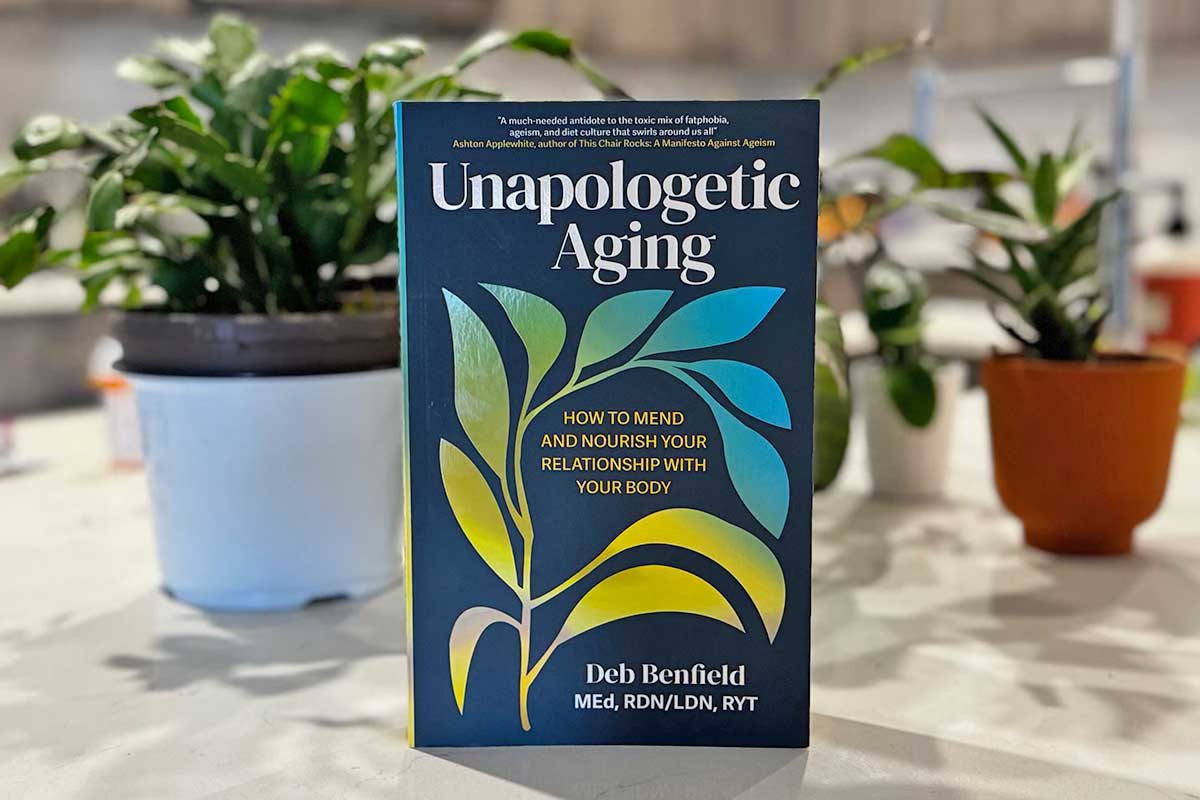
Registered dietitian Deb Benfield has spent decades working with people trying to untangle themselves from those pressures. Her new book, “Unapologetic Aging: How to Mend and Nourish Your Relationship with Your Body,” asks what it might look like to approach midlife without turning the body into a problem to solve.
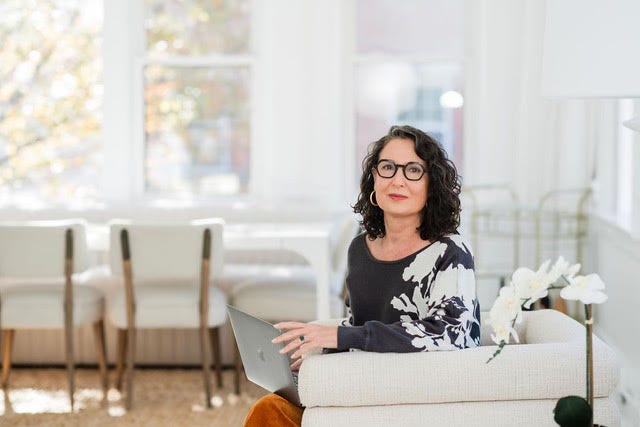
I spoke with Benfield in January about why aging can be such a flashpoint for diet culture, why so many women feel pressure to regain control of their bodies in midlife, and what it means to reconnect with the body instead of trying to manage it.
If you enjoy conversations like this one, consider subscribing to Almost Sated.
Subscribers get new essays and interviews exploring food, body trust, and life beyond diet culture.
Deb Benfield, RD, LDN, RYT is a Registered Dietitian, Nutrition Therapist, and Body Image Coach with 40 years of experience helping people heal their relationships with food, movement, and their bodies. Her work sits at the intersection of body liberation, anti-ageism, and trauma-informed care, supporting people in untangling from diet culture and ageism so they can age unapologetically.
She is the author of "Unapologetic Aging: How to Mend and Nourish Your Relationship with Your Body (Hachette, 2025) and writes the Substack Unapologetic Aging, where she explores the cultural forces shaping our relationships with our bodies in midlife and beyond. Benfield and I spoke in late January, she from her home in North Carolina during a winter storm and me from just outside Austin, Texas.
“When you’re in [diet] recovery, you leave treatment and walk into a world that is inundating you with dysfunction. It’s like coming out of rehab and living in a frat party where everybody’s partying.” — Deb Benfield
Why aging needed a non-diet conversation
Transcript (edited for clarity and length)
Kristi Koeter
I’m interested in why you wanted to delve into the subject of aging from a non-diet perspective. There are a few books on intuitive eating, but almost none of them touch on the aging process, or what you’re calling midlife plus.
Deb Benfield
My experience with talking to people that are reading the book is that this is a much younger conversation than I ever expected it to be. So many women in their 30s are contacting me, and 20s, about how much pressure is felt about fighting aging, and so much fear around perimenopause now, that it already feels like it’s a shifting conversation.
When I turned 60, I got curious about just what was out there, what was being said about making choices to support our bodies in this stage in life. And I was just so upset. I was so angry and so sad.
And I don’t know why I was surprised. I should have expected this. But I was just so upset that the presence of diet culture and the centering of managing weight was just all I saw.
And I felt like I had to, for myself, find something different and then create something different for others who were in this stage of life and, of course, younger and approaching perimenopause and menopause.
It feels to me like that’s when the body starts to change. And it is helpful to pay attention to your choices without centering what’s on the scales.
I know that a lot of women relapse in their eating disorders because they feel like what they have been doing doesn’t work anymore, which that sentence reflects the white knuckling around controlling and managing our bodies as kind of our norm.
So as we intensify restriction and effort when it comes to exercise, it creates this very disordered relationship with our bodies that I think is deeply sad.
This is the time that I particularly want to celebrate. I want to embrace what this chapter can be, and I think it’s a very, it’s a beautiful time of life.
And yes, it comes with loss and sadness and hard things too. Yeah. But it has the potential to be incredibly empowering. At least that was my experience.
And it feels like we lose touch, we lose that potential when we get so overly focused on this body management project.
Kristi Koeter
I quit diets before I realized I was in perimenopause. And part of this journey has been going experiencing massive changes, a lot of brain fog and sort of loss of identity. For a while, I didn’t feel like myself. I had the body changes that came with no longer dieting, but I think they probably overlapped that perimenopause state. So I didn’t really have that experience of … I’m in perimenopause and nothing’s working anymore, right? Because I was intentionally not doing this anymore.
So it was a different experience for me, but I had girlfriends going through the frustration of suddenly they have a middle section that wasn’t there before. And so it was interesting to watch other people go through that and also have my own journey that was similar, but not the same.
The rise of Ozempic and weight loss drugs
Kristi Koeter
So when you started writing your book, was it before the Ozempic explosion?
Deb Benfield
It was just early days. I feel like it’s now so central to all the conversations all the time.
But it wasn’t like that when I first started writing. It was definitely a quieter phenomenon. It was happening, but not to the degree it’s happening now.
One of my clients just told me she pulled up her MyChart, her electronic health record.
And there was a box. It’s like, do you want to talk to your provider about GLP-1s?
It’s just like part of the system now.
It feels like it’s part of everybody’s conversation with their healthcare provider and otherwise.
Benfield’s path into eating disorder work
Kristi Koeter
Do you mind sharing some of your own origin around diet culture and how it influenced the work that you’re doing now?
Deb Benfield
So my undergrad, I got degrees in psychology and world religions. And then I went to grad school in nutrition. So my underpinnings around how I approach things was not nearly as medical. It was much more about the whole person. And my thought was that I wanted to talk to women about how they felt about their bodies in the 70s.
And there were some people in my family that had complicated relationships with their body. And I could see that they’re eating, I could see that there was something unusual about what was happening there. And that there was eating to regulate emotion, for example.
I could see that. But I have a lot of privilege in that my genetics are just tall and thin.
So the other privilege that I have, well, many others, I mean, white and able-bodied and all of those, I want to make that very clear, unearned privileges. But also, an interesting privilege that I’ve now identified is that appearance was not a focus on my family.
There was not pressure around how we looked. And I have always been very outdoorsy and natural and kind of an earth mama in the ‘70s. I was just wearing overalls and had long braids. I just did not focus on appearance.
And I was always very active and loved to be outside. So it just naturally happened that body size and what I was eating wasn’t a thing. But I knew it was a thing for a lot of other people, and especially women.
And I was curious about the nutrition piece because I also had an interesting science preference because before, like when I was in high school I wanted to be like a park ranger to start with. So I’ve always had this science interest. So when I happened upon nutrition, it’s like, cha-ching, it just fell into place because it was a way for me to look at human beings and their relationships with themselves and the world through their bodies.
And the science piece was with actual nutrition. So it just worked for me. And when I started actually seeing clients, as a dietician in a clinic, I quickly noticed that telling people what to eat was ridiculous.
It just felt very wrong. And I was referring people to a therapist in town about many other things, about their lives and experiences, along with how they were caring for their bodies, with how they fed themselves.
And we really clicked and she was really excited to find me.
So she invited me to join her practice, and her specialty was eating disorders. So I got a supervisor in my life early, in my career who specialized in eating disorders.
So, of course, I fell in love with the work because it’s so multifactorial. You do the psychological piece, the family piece, the cultural piece, the science, the medicine piece, all of it. It really fascinated me and has kept me interested my entire adult life.
And I’m very much on a mission to now help women that are approaching aging, because I also am a strong activist. All of the systems that are in place make us unhappy with our bodies or distracted by manufacturing this unhappiness in our bodies.
Why diet culture is a systemic problem
Kristi Koeter
Well, let’s get into that. Because I think that is one of the things that differentiates your book from a lot of these other non-diet books written by dietitians. Very few of them get into the deeper systemic issues.
Why did you want to cover that? It feels like it’s a running theme throughout your book.
Deb Benfield
I don’t know if people can actually mend and recover if they don’t recognize how this is not an individual issue, it’s a systemic issue and people are caught in the system.
And I don’t know if you can extricate yourself and if you just identify your individual issues. The metaphor that I have used for many years is that when people go to rehab to deal with other kinds of issues and addiction, they can leave rehab and hopefully be in a world where they make choices, where they’re not exposed to the substance and the community that’s using the substance.
When you’re in [diet] recovery, when you leave treatment, you walk into a world that is inundating you with all of the dysfunction. My analogy is, it’s like coming out of rehab and living in a frat party where everybody’s partying.
Everybody is talking about dieting. And to me, that’s the issue. The through line for me is restriction and drive for thinness. And if you have to be exposed to that all the time, then it’s very difficult to fully recover and to feel comfortable in your body.
So I think it’s necessary to be able to identify that these messages that you’ve internalized about aging and about size and about food and about exercise goes on and on.
And like clothing, it just goes on and on, are all like learned and not yours. And so once you can identify that, I think it gives you the capacity to talk to yourself in a different way.
Kristi Koeter
I totally, a hundred percent agree. I think a lot of us probably start the process thinking it’s an individual problem, and we’re the problem.
I know I began from that perspective. I spent my whole life believing that.
And then having that larger understanding, that to me is the grounding for the recovery work.
When I started this, I kind of thought, yeah, one day I’ll have a day where I can put my flag in the ground and say I’m healed. I know now that is, or I view that, as an unrealistic unattainable goal, not because of me, but because of the society we’re in.
Deb Benfield
Correct. Absolutely. Because it’s getting worse. That’s no question. It’s getting much harder.
Why calling yourself ‘non-diet’ scares people
Kristi Koeter
Since we’re on this topic, I saw your note on Substack … you wrote a post about why you think of yourself or call yourself a non-diet dietitian and you talked about losing subscribers. And I wanted to dig in a little bit about why you think that is.
Deb Benfield
I think people are frightened by stepping away from several different things as we age. The first is, and we talked before, well, we interacted before about the body hierarchy that we’re all living in.
And there is an element, however, I don’t know how real it is, but I think there’s a feeling that if you remain thin, you will be more perceived as worthy.
And have a sense of belonging and have more social collateral and relevance as we age. So I think it’s scary to step away from this normalized diet culture that we all live in.
And I think that based on my experience with many clients, that there are increases in diagnosis as we age. There are increases in health anxiety. Our culture is full of fear-mongering around belly fat, for example. There’s a lot of fear-mongering and health anxiety around accepting the changes that happen as we age.
So I think people are very threatened and uncomfortable with, if not frightened by, a proposed questioning of that as necessary and helpful.
That perhaps our bodies change in midlife to protect us and prepare us for the challenge of aging. That’s what I really believe.
I have a belly now that I’ve not had before, and I do perceive it as a protective part of my body.
That I will fare with whatever happens next a little bit more because I’ve got a little extra in the warehouse.
I’ve got a little suitcase that I’m carrying with me, and you’ve probably heard me say or read my quoting Margot Maine, who calls it the little life raft. I feel like I’m not saying that correctly, but she was told that by actually one of her clients.
Kristi Koeter
How much of it do you think is influenced by the idea that not restricting is unhealthful.
I think there are a lot of people that really equate thinness as a sign that you are a healthy person. And then to say you’re non-diet. [I wonder] whether some of the backlash you’re getting is the perception that you’re anti-health somehow.
“The first book talk that I did, I said, ‘weight is not an indicator of health,’ and I could almost hear them gasp across the room. I didn’t think about the fact that people really have not been exposed to that line of thought. That’s a very radical statement for a lot of people. But I really believe the data supports that. I believe that there are many other indicators of your health.” — Deb Benfield
Deb Benfield
The first book talk that I did, I said, weight is not an indicator of health, and I could almost hear them gasp across the room. I didn’t think about the fact that people really have not been exposed to that line of thought. That’s a very radical statement for a lot of people. But I really believe the data supports that.
I believe that there are many other indicators of your health.
Kristi Koeter
And I can just tell you how you had some small snippets in your book talking about a trainer who had said one of his biggest clients was the fittest person he’d ever met, and I really related to that because I’ve been a lifelong athlete in one form or another, but it always felt like something was still wrong with me because of my size. And so it was this constant quest to prove myself, in many ways through athletic pursuits, and I really leaned into, for most of my 40s actually, Olympic lifting.

I kind of leaned into this idea that if I couldn’t be skinny, I could be strong,
Deb Benfield
I would imagine it was very empowering to see your body have the capacity for all of that strength.
Kristi Koeter
And being able to lean into it now, because for years, the narrative was you’ve got all this strength, but you’ve got this other problem that needs to be fixed.
I may never completely be healed of body trauma, but I know that my worth is not determined by my size.
And it took me 40 something years to get to that place. So, but I have to keep reinforcing it, because of the society we’re living in.
Supporting women through group coaching
Kristi Koeter
So I wanted to switch gears. You do group therapy, group coaching for women.
It’s not explicitly positioned, at least on your website, as break free of diets. It’s more like heal your relationship with your body, your relationship with food. I’m just curious how many women come into it not knowing that they may be giving up diets as part of the process, or is everybody coming into it with some understanding that that’s why they’re there?
Deb Benfield
Yeah, I screen heavily to make sure that people have already stepped away, and it’s always interesting, I have had to ask some folks to not be in the group, because they’re deeply caught up in wellness culture, and that’s a whole other conversation, but there are many, many food rules and fears and belief systems that are rooted in some of the wellness culture influencers that contaminate their relationship and keep them, in my opinion, stuck.
So I need to work harder on my screening. But to begin this process, that’s why I laid out the book the way I did, you have to extricate yourself from all the rules and the fight within you to be good. To be able to do the healing, and I do, my group is laid out like the book, we spend some time on understanding internalized ageism and internalized anti-fat bias and belief systems that are not in your best interest, that are, they’re keeping you stuck and disempowering and then moving to the healing.
It’s, as you said, it’s a long process. That’s why I have a membership for people to continue to have support because it’s not quick. It’s not an eight-week fix. It’s just nice to have a group. That’s what people tell me is that they feel so isolated.
They feel like they’re the only one because they usually are the only one.
So that’s why I have a group.
The cost of staying in a diet mindset as we age
Kristi Koeter
I was so lucky that I had, by virtue of my loved ones having eating disorders, I had access to people that were very strongly non-diet and on board with this way of thinking. And so in a way I was very conscious of having more support than most people going through this process.
So in terms of the aging process, what would you say is the greatest risk to women getting older and still being in this diet mindset? Is there one particular thing that you would say is the biggest harm?
Deb Benfield
To me, the biggest loss is to be fractured from your connection with your body, because you can’t really manage your body, approach how you nourish your body, how you move, how you dress, the connections that you have with your body, you can’t really have healthy connections, if you’re looking at your body with a lot of criticism and shoulds about your choices.
It keeps you very fractured from the potential connection. That saddens me for people because there’s a loss of access to pleasure, access to actual wisdom.
You really need to be able to pick up on messages from your body that let you know things have changed.
And I mean, it can let you know that you are becoming ill, that something is off, that you need to rest, that you’ve had enough and you can stop eating or all sorts of messages that you receive from your body.
But pleasure and presence, like being able to experience your present moment, it’s very hard to do if you’re caught up in narratives about what you should, and guilty about what you did, and all the anxiety, all that you get caught up in with diet culture.
So to me, that’s a big loss is the connection.
“Many women that I’ve talked to are just so full of disgust about their bodies, so full of harsh, harsh criticism about the fact that their bodies are showing signs that they’ve been on the planet for a longer period of time. I just feel like that’s a celebration that you’ve survived and thrived for a longer period of time.” — Deb Benfield
Kristi Koeter
And what do you think about that makes it worse as you age?
Deb Benfield
Well, if you’ve added ageism, if you’ve added fear and anxiety about what is happening over time, I think that increases your vulnerability to all the food rules and all the movement exercise rules.
Many women that I’ve talked to are just so full of disgust about their bodies, so full of harsh, harsh criticism about the fact that their bodies are showing signs that they’ve been on the planet for a longer period of time. I just feel like that’s a celebration that you’ve survived and thrived for a longer period of time.
Aging, values, and what actually matters
Kristi Koeter
I think we have these kind of dueling narratives right now. One of them is to never age. We have people who are trying to reverse their aging effectively. And then this idea of embracing aging.
How do we navigate that process with all of these messages that we’re getting?
Deb Benfield
And this is, again, a place where if you do this work, it actually does give you access to your internal value system.
In a lot of ways, it comes down to your values. Like, I want to have a sense of intimacy in the present life.
I want to be able to feel the air on my skin. I want to be able to taste my food.
I want to be able to actually rest when I need to rest. I want to have space in my life where I can be connected to my body and my senses.
That’s a value to me. If that, if being connected to your body isn’t something that you value, I can understand that you might be more interested in committing to an aggressive plan for longevity. My values don’t. I don’t feel strongly about that. I don’t feel like I need to live to be a certain age.
So I think values clarification is really important work.
Where people start when they’re afraid to let go
Kristi Koeter
I want to ask one last question, and that is just what you would say to someone who intellectually understands the harm of diet culture, but just isn’t ready to make that change.
Deb Benfield
I mean, some people believe in fake it till you make it, but I don’t know about that for this.
I almost feel like you can’t push the river. The people that I work with that are brand new with this, I start with self-compassion, like to try to create a practice of not being so harsh and critical, and this is a very complex answer at the end where we don’t have that much time, but I feel like understanding that you’re wanting to control your body size is understandable, it’s also protective in a lot of ways, and to try to give yourself some grace grace when you have these diet thoughts, when you have these like urgent need to damage control or whatever it might be about getting your body back into a certain place and contained.
Like to just allow yourself to be kinder and not reactive, just leaning into curiosity and kindness feels like the starting place.
When people tell me that they’re not beating themselves up as much, I know we’re getting somewhere. That’s a big, big first noticing.
Thanks for joining our conversation!
I’m curious what this brought up for you. Have you noticed the pressure to control or fix your body as it changes with age? Have you noticed midlife (or beyond) as the place where you have found more compassion for yourself or do you feel the pressure is growing? Share your thoughts in the comments. I’d love to continue the discussion.
If you enjoyed the conversation, please support this work with a paid subscription. They start at just $5 a month, and you’ll keep Almost Sated an ad-free space. Learn more at https://www.almostsated.com/subscribe.


